 (848) 800-4263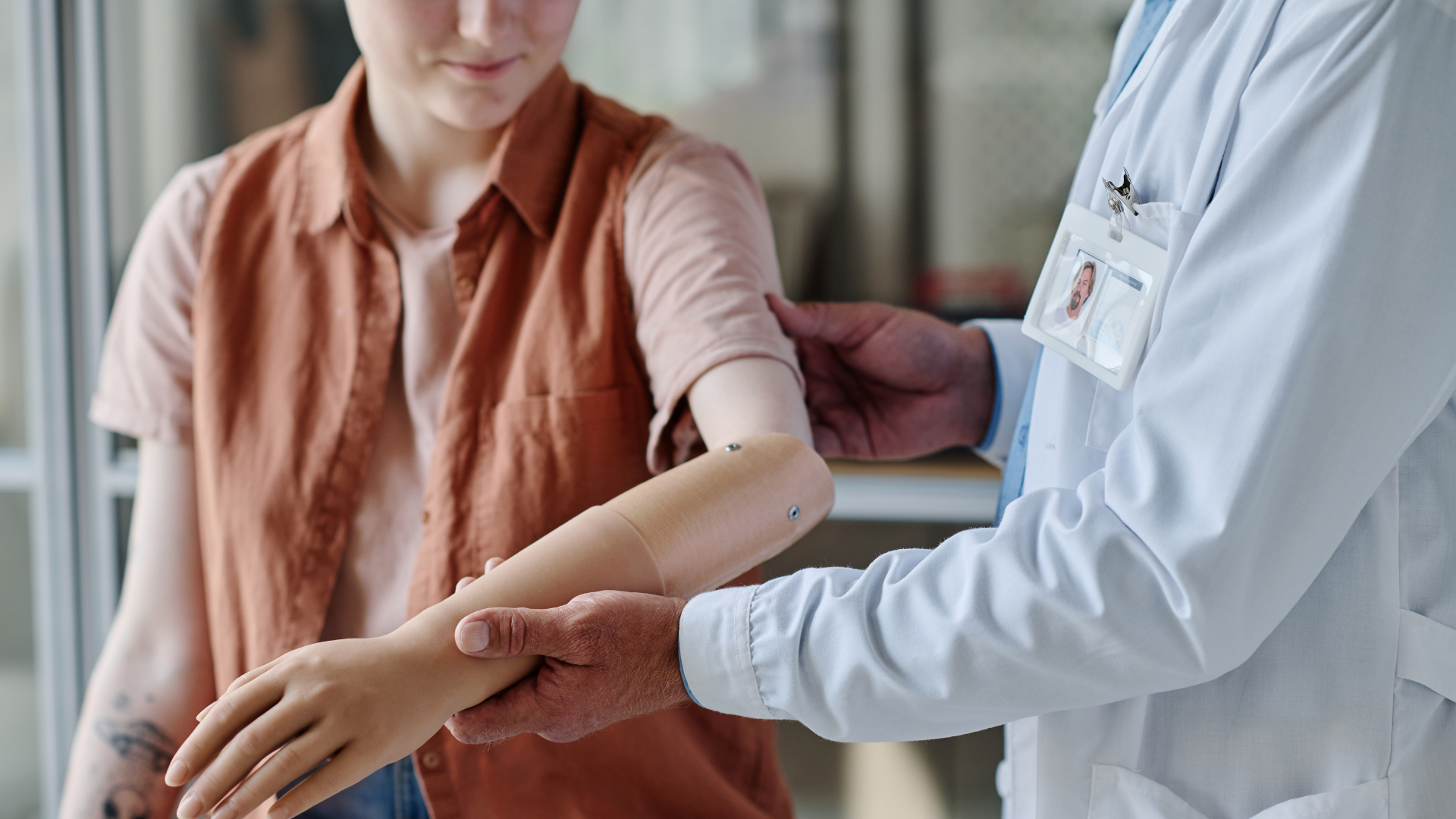
What Is Targeted Muscle Reinnervation (TMR)? A Guide After Limb Loss
Since the earliest prosthetic devices were developed, surgeons and rehabilitation specialists have worked to improve comfort, function, and long-term outcomes after limb loss. In recent decades, an advanced nerve procedure known as targeted muscle reinnervation (TMR) has expanded treatment options for select individuals, particularly those with upper-extremity limb loss.
TMR is designed to address chronic nerve pain while preserving nerve signals that can support more intuitive prosthetic control. By redirecting severed nerves into healthy muscle tissue, specialized care teams at Amputation Rehabilitation Medicine and Surgery (ARMS) focus on reducing pain, supporting healing, and improving functional use of upper-extremity prosthetics over time.
What Is Targeted Muscle Reinnervation (TMR)?
Targeted muscle reinnervation is a surgical procedure in which severed nerve endings from an amputation are transferred into nearby functionally redundant nerves that grow into healthy muscle. The muscle provides a functional target for the nerve to heal, which helps reduce the risk of neuroma formation. Neuromas are painful bundles of nerve tissue that can contribute to phantom or residual limb pain.
For individuals with upper-extremity limb loss, TMR also plays an important role in preserving nerve signals that may later be used to control myoelectric prosthetic devices. While TMR is often performed at the time of amputation, it can also be completed as a secondary procedure for people who are already living with limb loss and experiencing nerve pain or difficulty using a prosthesis.
Who Should Consider TMR?
TMR may be considered for individuals who experience:
- Chronic phantom or residual limb pain
- Neuroma-related discomfort
- Difficulty tolerating or controlling a prosthetic device
- Challenges with myoelectric prosthetic signal reliability
Beyond pain relief, TMR can help create a clearer connection between the nervous system and a prosthetic device. For select upper-extremity prosthetic users, this may support more precise and responsive control during daily activities.
What to Expect from TMR Surgery & Recovery
The circumstances surrounding a TMR procedure can vary. Some procedures are performed at the time of amputation, while others are planned later to address ongoing nerve pain or prosthetic challenges. Before surgery, your care team will review the procedure, discuss recovery expectations, and answer any questions you may have.
TMR surgery typically lasts several hours and is performed under general anesthesia. After surgery, patients may stay briefly in the hospital so the care team can monitor early healing, manage pain, and reduce the risk of complications.
Once cleared by the surgeon, rehabilitation begins. This often includes:
- Follow-up appointments to monitor healing and adjust the treatment plan
- Physical therapy to improve comfort, strength, and control at the surgical site
- Occupational therapy to support daily activities and prosthetic training
- Mental health support to address the emotional aspects of recovery
- Coordination with prosthetists to optimize prosthetic design and function
Recovery timelines vary from person to person. Working with a specialized, multidisciplinary care team is one of the most important factors in achieving the best possible outcome.
Surgical Spotlight: Dr. Ajul Shah Leads TMR Care at ARMS
A commitment to advancing care after limb loss drives ARMS co-founder Dr. Ajul Shah. Dr. Shah is double board-certified in plastic and reconstructive surgery and has completed advanced training in microsurgery and bionic limb reconstruction. His work focuses on reducing nerve pain while preserving function and long-term prosthetic potential.
“Targeted muscle reinnervation allows us to address nerve pain while preserving the nerve signals needed for advanced prosthetic control,” explains Dr. Shah. “For individuals with upper-extremity limb loss, this can support greater comfort and improved functional use of a prosthesis over time.”
To see the real-world impact of Dr. Shah's compassion and expertise, watch Matt's story, a journey of amputation, recovery, and new possibilities with advanced prosthetic control following TMR.
Is TMR Right for You? Find Out Today
Whether you are newly adjusting to limb loss or have been managing nerve-related pain or prosthetic challenges for years, targeted muscle reinnervation may be an option worth exploring. Determining whether TMR is appropriate requires careful evaluation by a specialized care team that understands both surgical and rehabilitative considerations.
At Amputation Rehabilitation Medicine and Surgery (ARMS), surgeons, therapists, prosthetic specialists, and mental health providers work together to support patients through every stage of advanced limb loss care.
Schedule an appointment today to learn whether TMR may be part of your treatment plan.